How, then, does one become an activist?
The easy answer would be to say that we do not become activists; we simply forget that we are. We are all born with compassion, generosity, and love for others inside us. We are all moved by injustice and discrimination. We are all, inside, concerned human beings. We all want to give more than to receive. We all want to live in a world where solidarity and companionship are more important values than individualism and selfishness. We all want to share beautiful things; experience joy, laughter, love; and experiment, together.
American linguist and activist (born 1928)
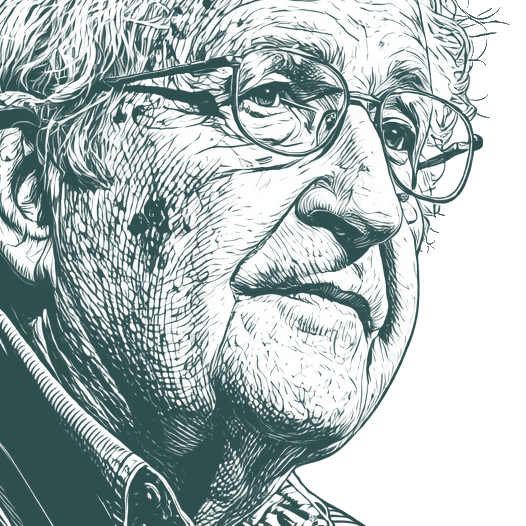
Avram Noam Chomsky (born 7 December 1928) is an American linguist, analytical philosopher, cognitive scientist, political analyst, human rights activist and anarcho-socialist.
Bio from: Wikiquote (CC BY-SA 4.0) · Portrait adapted from: Wikimedia Commons, Augusto Starita / Ministerio de Cultura de la Nación (CC BY-SA)
Birth Name:
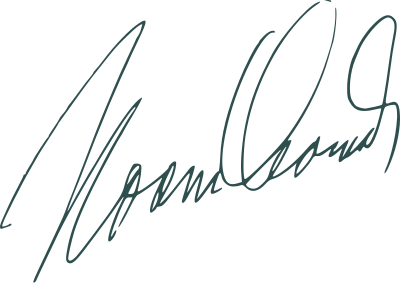
Avram Noam Chomsky
Alternative Names:
A. Noam Chomsky
•
Chomsky
From Wikidata (CC0)
Showing quotes in randomized order to avoid selection bias. Click Popular for most popular quotes.
The issue is whether we want to live in a free society or whether we want to live under what amounts to a form of self-imposed totalitarianism, with the bewildered herd marginalized, directed elsewhere, terrified, screaming patriotic slogans, fearing for their lives, and admiring with awe the leader who saved them from destruction, while the educated masses goose-step on command and repeat the slogans they’re supposed to repeat and the society deteriorates at home.
The last paradox is that the tale of Palestine from the beginning until today is a simple story of colonialism and dispossession, yet the world treats it as a multifaceted and complex story — hard to understand and even harder to solve. Indeed, the story of Palestine has been told before: European settlers coming to a foreign land, settling there, and either committing genocide against or expelling the indigenous people. The Zionists have not invented anything new in this respect.
The neoliberal version of capitalism has been in force since Reagan and Margaret Thatcher, beginning shortly before. There should be no need to detail its grim consequences. Reagan's generosity to the super-rich is of direct relevance today as another bailout is in progress. Reagan quickly lifted the ban on s and other devices to shift the tax burden to the public, and also authorized stock buybacks — a device to inflate s and enrich corporate management and the very wealthy (who own most of the stock) while undermining the of the enterprise.
The issue is whether we want to live in a free society or whether we want to live under what amounts to a form of self-imposed totalitarianism... admiring with awe the leader who saved them from destruction, while the educated masses goose-step on command and repeat the slogans they're supposed to repeat and the society deteriorates at home. We end up serving as a mercenary enforcer state, hoping that others are going to pay us to smash up the world.
The Americans didn't even think about the outcome of the bombing, because the Sudanese were so far below contempt as to be not worth thinking about. Suppose I walk down the sidewalk in Cambridge and, without a second thought, step on an ant. That would mean that I regard the ant as beneath contempt, and that's morally worse than if I purposely killed that ant.
We’ve been living through about 45 years of a particular socio-economic political system, what’s called neoliberalism... The so-called free trade agreements or radically protectionist that we’re seeing that right now in front of our eyes, we see virtual monopoly on drugs. What we’ve really had for the 45 years is what so many economists have called a bail out economy. So it’s one side of class war, markets for the poor, protection for the rich.
"If you care about other people, that's now a very dangerous idea. If you care about other people, you might try to organize to undermine power and authority. That's not going to happen if you care only about yourself. Maybe you can become rich, but you don't care whether other people's kids can go to school, or can afford food to eat, or things like that. In the United States, that's called "libertarian" for some wild reason. I mean, it's actually highly authoritarian, but that doctrine is extremely important for power systems as a way of atomizing and undermining the public."
Within modern linguistics, it is chiefly within the last few years that fairly substantial attempts have been made to construct explicit generative grammars for particular languages and to explore their consequences. No great surprise should be occasioned by the extensive discussion and debate concerning the proper formulation of the theory of generative grammar and the correct description of the languages that have been most intensively studied. The tentative character of any conclusions that can now be advanced concerning linguistic theory, or, for that matter, English grammar, should certainly be obvious to anyone working in this area. (It is sufficient to consider the vast range of linguistic phenomena that have resisted insightful formulation in any terms.) Still, it seems that certain fairly substantial conclusions are emerging and receiving continually increased support. In particular, the central role of grammatical transformations in any empirically adequate generative grammar seems to me to be established quite firmly, though there remain many questions as to the proper form of the theory of transformational grammar.
No rational person will approve of violence and terror, and in particular the terror of the post-revolutionary state that has fallen into the hands of a grim autocracy has more than once reached indescribable levels of savagery. At the same time, no person of understanding or humanity will too quickly condemn the violence that often occurs, when long subdued masses rise against their oppressors or take their first steps toward liberty and social reconstruction.
what are called opinions “on the left” and “on the right” in the media represent only a limited spectrum of debate, which reflects the range of needs of private power — but there’s essentially nothing beyond those “acceptable” positions. So what the media do, in effect, is to take the set of assumptions which express the basic ideas of the propaganda system, whether about the Cold War or the economic system or the “national interest” and so on, and then present a range of debate within that framework — so the debate only enhances the strength of the assumptions, ingraining them in people’s minds as the entire possible spectrum of opinion that there is.