Franco-Czechoslovak poet and novelist (1929—2023)
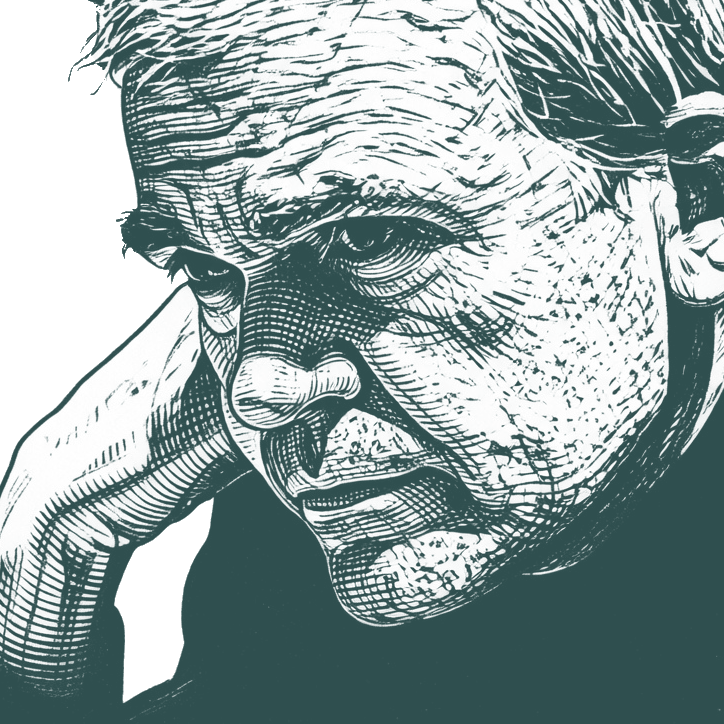
Milan Kundera (1 April 1929 – 11 July 2023) was a Franco-Czech novelist born in Brno, Czechoslovakia (now the Czech Republic).
Bio from: Wikiquote (CC BY-SA 4.0) · Portrait adapted from: Wikimedia Commons, Elisa Cabot (CC BY-SA)
From Wikidata (CC0)

For Sabina, living in truth, lying neither to ourselves nor to others, was possible only away from the public: the moment someone keeps an eye on what we do, we involuntarily make allowances for that eye, and nothing we do is truthful. Having a public, keeping a public in mind, means living in lies.
For Sabina, living in truth, lying neither to ourselves not others, was possible only away from the public: the moment someone keeps an eye on what we do, we involuntarily make allowances for that eye, and nothing we do is truthful. Having a public, keeping a public in mind, means living in lies. Sabina despised literature in which people give away all kinds of intimate secrets about themselves and their friends. A man who loses his privacy loses everything, Sabina thought. And a man who gives it up on his own free will is a monster. That is why Sabina did not suffer in the least from having to keep her love a secret. On the contrary, only by doing so could she live the truth.
This symmetrical composition- the same motif appears at the beginning and at the end- may seem quite 'novelistic' to you, and I am willing to agree, but only on condition that you refrain from reading such notions as 'fictive,' 'fabricated,' and 'untrue to life' into the word 'novelistic.' Because human lives are composed in precisely such a fashion. They are composed like music. Guided by his sense of beauty, an individual transforms a fortuitous occurrence (Beethoven's music, death under a train), into a motif, which then assumes a permanent place in the composition of the individual's life... Without realizing it, the individual composes his life according to the laws of beauty even in times of greatest distress... The brain appears to possess a special area which we might call poetic memory and which records everything that charms or touches us, that makes our lives beautiful.
Works in ChatGPT, Claude, or Any AI
Add semantic quote search to your AI assistant via MCP. One command setup.
Everyone is wrong about the future. Man can only be certain about the present moment. But is that quite true either? Can he really know the present? Is he in a position to make any judgment about it? Certainly not. For how can a person with no knowledge of the future understand the meaning of the present? If we do not know what future the present is leading us toward, how can we say whether this present is good or bad, whether it deserves our concurrence, or our suspicion, or our hatred?
Works in ChatGPT, Claude, or Any AI
Add semantic quote search to your AI assistant via MCP. One command setup.