The great liberal betrayal of this generation is that in the name of liberalism, communal rights have been prioritized over individual autonomy within minority groups. And minorities within minorities really do suffer because of this betrayal. The people I really worry about when we have this conversation are feminist Muslims, gay Muslims, ex-Muslims — all the vulnerable and bullied individuals who are not just stigmatized but in many cases violently assaulted or killed merely for being against the norm.
American author, philosopher and neuroscientist (born 1967)
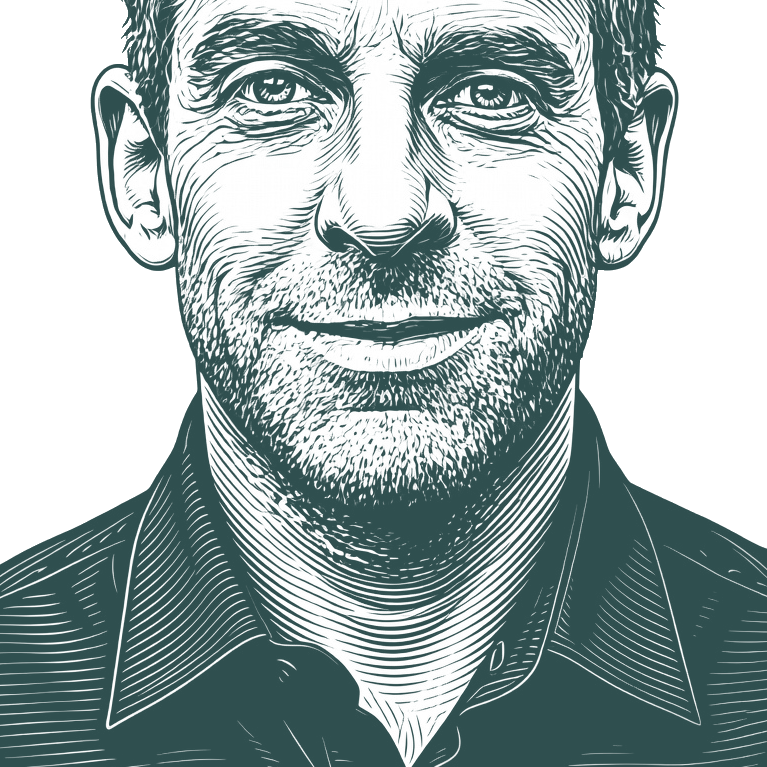
Samuel Benjamin Harris (born April 9, 1967) is an American author, philosopher, public intellectual, and neuroscientist, as well as the co-founder and CEO of Project Reason. He is the author of The End of Faith (2004), which won the PEN/Martha Albrand Award for First Nonfiction in 2005 and appeared on The New York Times best seller list for 33 weeks, Letter to a Christian Nation (2006), The Moral Landscape (2010), Lying (2011), Free Will (2012), and most recently Waking Up: A Guide to Spirituality Without Religion (2014).
Bio from: Wikiquote (CC BY-SA 4.0) · Portrait adapted from: Wikimedia Commons, Cmichel67 (Christopher Michel) (CC BY-SA)
Birth Name:
Samuel Benjamin Harris
Alternative Names:
Samuel Harris
From Wikidata (CC0)

Showing quotes in randomized order to avoid selection bias. Click Popular for most popular quotes.
Incompatible religious doctrines have balkanized our world into separate moral communities, and these divisions have become a continuous source of bloodshed. Indeed, religion is as much a living spring of violence today as it has been at any time in the past. The recent conflicts in Palestine (Jews vs. Muslims), the Balkans (Orthodox Serbians vs. Catholic Croatians; Orthodox Serbians vs. Bosnian and Albanian Muslims), Northern Ireland (Protestants vs. Catholics), Kashmir (Muslims vs. Hindus), Sudan (Muslims vs. Christians and animists), Nigeria (Muslims vs. Christians), Ethiopia and Eritrea (Muslims vs. Christians), Sri Lanka (Sinhalese Buddhists vs. Tamil Hindus), Indonesia (Muslims vs. Timorese Christians), Iran and Iraq (Shiite vs. Sunni Muslims), and the Caucasus (Orthodox Russians vs. Chechen Muslims; Muslim Azerbaijanis vs. Catholic and Orthodox Armenians) are merely a few cases in point. These are places where religion has been the explicit cause of literally millions of deaths in recent decades.
Why is religion such a potent source of violence? There is no other sphere of discourse in which human beings so fully articulate their differences from one another, or cast these differences in terms of everlasting rewards and punishments. Religion is the one endeavor in which us–them thinking achieves a transcendent significance. If you really believe that calling God by the right name can spell the difference between eternal happiness and eternal suffering, then it becomes quite reasonable to treat heretics and unbelievers rather badly. The stakes of our religious differences are immeasurably higher than those born of mere tribalism, racism, or politics.
Is is, therefore, not an exaggeration to say that if the city of New York were suddenly replaced by a ball of fire, some significant percentage of the American population would see a silver-lining in the subsequent mushroom cloud, as it would suggest to them that the best thing that is ever going to happen was about to happen: the return of Christ. It should be blindingly obvious that beliefs of this sort will do little to help us create a durable future for ourselves - socially, economically, environmentally, or geopolitically. Imagine the consequences if any significant component of the US government actually believed that the world was about to end and that its ending would be glorious. The fact that nearly half of the American population apparently believes this, purely on the basis of religion dogma, should be considered a moral and intellectual emergency.
The fact that the universe is illuminated where you stand — that your thoughts and moods and sensations have a qualitative character in this moment — is a mystery, exceeded only by the mystery that there should be something rather than nothing in the first place. Although science may ultimately show us how to truly maximize human well-being, it may still fail to dispel the fundamental mystery of our being itself.
There is a distinction between voluntary and involuntary actions, of course, but it does nothing to support the common idea of free will (nor does it depend upon it). A voluntary action is accompanied by the felt intention to carry it out, whereas an involuntary action isn’t. Needless to say, this difference is reflected at the level of the brain. And what a person consciously intends to do says a lot about him. It makes sense to treat a man who enjoys murdering children differently from one who accidentally hit and killed a child with his car — because the conscious intentions of the former give us a lot of information about how he is likely to behave in the future. But where intentions themselves come from, and what determines their character in every instance, remains perfectly mysterious in subjective terms. Our sense of free will results from a failure to appreciate this: We do not know what we intend to do until the intention itself arises. To understand this is to realize that we are not the authors of our thoughts and actions in the way that people generally suppose.
The connection between facts and values is straightforward and philosophically uninteresting... values reduce to facts about the well-being of conscious creatures; the well-being of conscious creatures is what can be valued in this universe... Now, here’s the one bit of philosophy I’m going to anchor this to: imagine a universe in which every conscious creature suffers as much as it can for as long as it can – I call this the worst possible misery for everyone. The worst possible misery for everyone is bad. If the word bad is to mean anything, surely it applies to the worst possible misery for everyone... the moment you grant me that the worst possible misery for everyone is bad and therefore worth avoiding... well then you have every other possible constellation of conscious experience which, by definition, is better. So you have this continuum here of states of consciousness and given that consciousness is related to the way the universe is, it’s constrained by the laws of nature in some way, there are going to be right and wrong ways to move along this continuum... now this is, in philosophy, a somewhat controversial statement. I do not see how.
According to the Buddhist teachings, human beings have a distorted view of reality that leads them to suffer unnecessarily. We grasp at transitory pleasures. We brood about the past and worry about the future. We continually seek to prop up and defend an egoic self that doesn’t exist. This is stressful — and spiritual life is a process of gradually unraveling our confusion and bringing this stress to an end. According to the Buddhist view, by seeing things as they are, we cease to suffer in the usual ways, and our minds can open to states of well-being that are intrinsic to the nature of consciousness.
If I could wave a magic wand and get rid of either rape or religion, I would not hesitate to get rid of religion. I think more people are dying as a result of our religious myths than as a result of any other ideology. I would not say that all human conflict is born of religion or religious differences, but for the human community to be fractured on the basis of religious doctrines that are fundamentally incompatible, in an age when nuclear weapons are proliferating, is a terrifying scenario.
The difference between killing one man and killing a thousand just doesn’t seem as salient to us as it should. And, as Glover observes, in many cases we will find the former far more disturbing. Three million souls can be starved and murdered in the Congo, and our Argus-eyed media scarcely blink. When a princess dies in a car accident, however, a quarter of the earth’s population falls prostrate with grief. Perhaps we are unable to feel what we must feel in order to change our world.