Franco-Czechoslovak poet and novelist (1929—2023)
Milan Kundera (1 April 1929 – 11 July 2023) was a Franco-Czech novelist born in Brno, Czechoslovakia (now the Czech Republic).
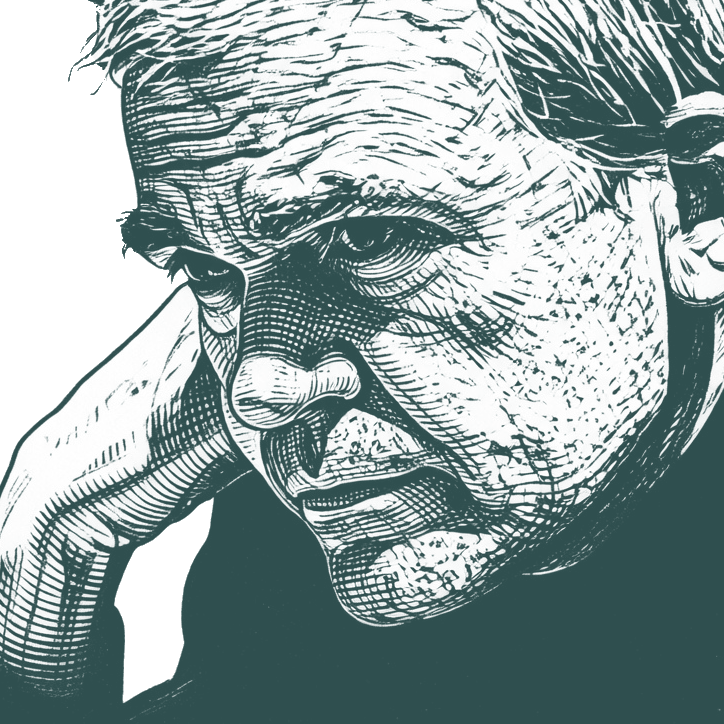
Bio from: Wikiquote (CC BY-SA 4.0) · Portrait adapted from: Wikimedia Commons, Elisa Cabot (CC BY-SA)
From Wikidata (CC0)

"It was vertigo. A heady, insuperable longing to fall. We might also call vertigo the intoxication of the weak. Aware of his weakness, a man decides to give in rather than stand up to it. He is drunk with weakness, wishes to grow even weaker, wishes to fall down in the middle of the main square in front of everybody, wishes to be down, lower than down." -Milan Kundera, The Unbearable Lightness of Being, p. 76
Advanced Search Filters
Filter search results by source, date, and more with our premium search tools.
No peace is possible between the novelist and the agélaste [those who do not laugh]. Never having heard God's laughter, the agélastes are convinced that the truth is obvious, that all men necessarily think the same thing, and that they themselves are exactly what they think they are. But it is precisely in losing the certainty of truth and the unanimous agreement of others that man becomes an individual. The novel is the imaginary paradise of individuals. It is the territory where no one possesses the truth, neither Anna nor Karenin, but where everyone has the right to be understood, both Anna and Karenin.
"The phrase "It's absolutely the same with me, I..." seems to be an approving echo, a way of continuing the other's thought, but that is an illusion: in reality it is a brute revolt against a brutal violence, an effort to free our own ear from bondage and to occupy the enemy's ear by force. Because all of man's life among his kind is nothing other than a battle to seize the ear of others."
vivre dans la vérité, ne mentir ni à soi-même ni aux autres, ce n'est possible qu'à la condition de vivre sans public. Dès lors qu'il y a un témoin à nos actes, nous nous adaptons bon gré mal gré aux yeux qui nous observent, et plus rien de ce que nous faisons n'est vrai. Avoir un public, penser à un public, c'est vivre dans le mensonge (partie III, ch. 7)
What does it mean to demonstrate in the streets, what is the significance of that collective activity so symptomatic of the twentieth century? In stupefaction Ulrich watches the demonstrators from the window; as they reach the foot of the palace, their faces turn up, turn furious, the men brandish their walking sticks, but “a few steps farther, at a bend where the demonstration seemed to scatter into the wings, most of them were already dropping their greasepaint: it would be absurd to keep up the menacing looks where there were no more spectators.” In the light of that metaphor, the demonstrators are not men in a rage; they are actors performing rage! As soon as the performance is over they are quick to drop their greasepaint! Later, in the 1960s, philosophers would talk about the modern world in which everything had turned into spectacle: demonstrations, wars, and even love; through this “quick and sagacious penetration” (Fielding), Musil had already long ago discerned the “society of spectacle.